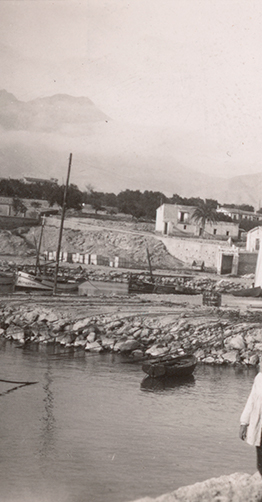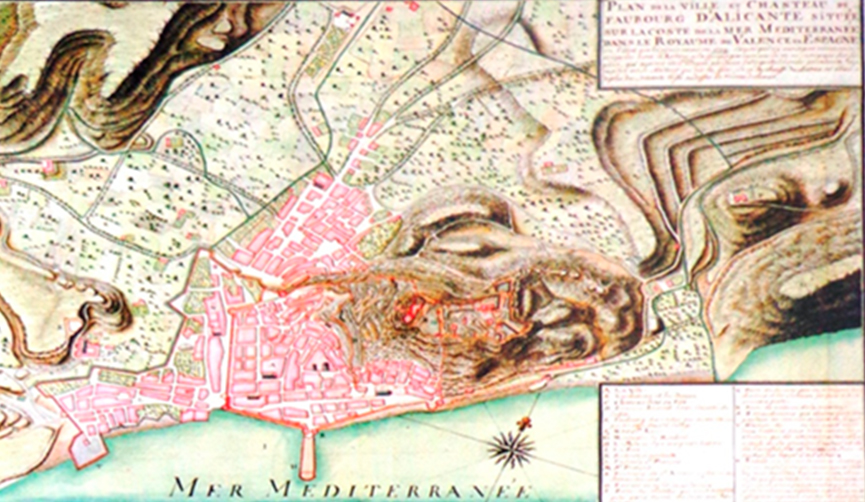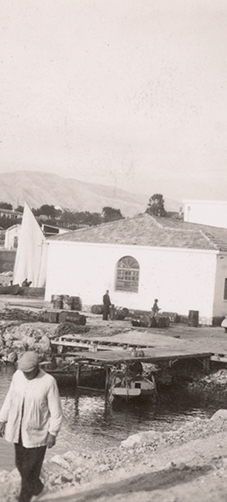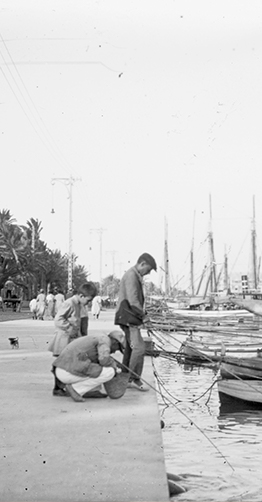
History

  • The origins of the port: Iberians and Romans on the Alicante coastline
  • El Tossal de Manises
  • The strategic importance of the port of Alicante in the Middle Ages
  • The Castilian reconquest of Alicante
  • Aragonese domination of the Mediterranean
  • The rise of Alicante in the Modern Age, from a town to a major commercial port city
  • Castile’s port in the Mediterranean
  • The development of the port’s infrastructure
  • Constitution of the Port’s Works Council
  • New Western Quaysides
  • 60s and 70s

The origins of the port: Iberians and Romans on the Alicante coastline

The characteristics of the bay of Alicante, with the many different winds that lash the coastline and a sandy seabed filled with seaweed that calms the waves during storms, has, since long ago, attracted groups of people to settle here. These indigenous populations took advantage of the shelter afforded by Alicante’s natural bay, tucked between the Cape of Las Huertas to the north and the Cape of Santa Pola to the south, to prosper.

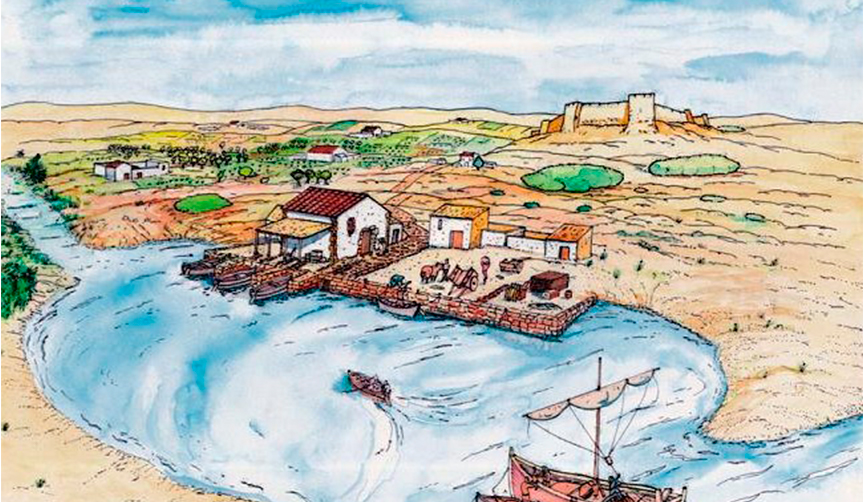
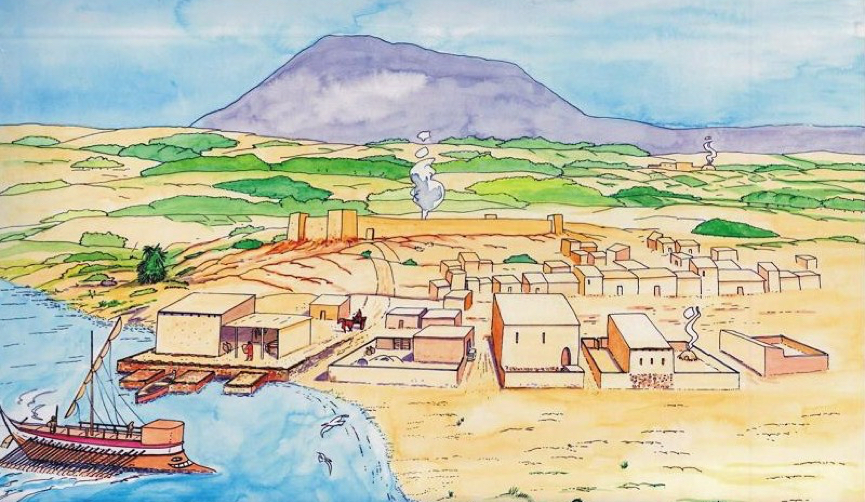
Recreación del embarcadero ibérico del Tossal de les Basses (Cortesía de Arpa Patrimonio)Recreation of the Iberian jetty of El Tossal de les Basses (Courtesy of Arpa Patrimonio)

In the 5th Century BC, on the site where La Albufereta now stands, a large group of Iberian settlers founded an enclave, now known as El Tossal de les Basses, which occupied the top and slopes of a small hillock surrounded by a lagoon. In addition to farming, the Iberians developed a solid and advanced industry in ceramics and silver, which provided the foundation for their commercial relations. According to the archaeologist Pablo Rosser in his book ‘Surcando el tiempo’, published by the MARQ, this walled settlement was a true “industrial estate”.

To sell the items produced, the southern area of El Tossal de les Basses had a jetty. This hypothesis is based on the archaeological digs carried out on the site, which uncovered a wall around 26 metres long, with different areas and annex buildings, which may have been used for storage; as well as several projecting platforms that could have been used as quays.

The port structure was at the southern tip of this Iberian settlement. At that time, the sea lagoon of La Albufereta reached around 250 metres inland of the gully, taking the current coastline as a reference. It is feasible, therefore, that it was used as a mooring point for small boats, whereas the central part of the lagoon had sufficient depth to moor larger vessels.

El Tossal de les Basses reached its zenith between the 5th and 4th Centuries BC. However, throughout the 3rd Century BC, the city of Lucentum (Tossal de Manises) began to steal the limelight. The decline of the settlement might be due to alluviation in the late Iberian period (3rd Century BC), according to a sedimentological study of the area. This circumstance hindered maritime links into the gully, since a sandy barrier island formed and there was only a small sea inlet by La Albufereta beach.

Tossal de Manises

The socio-political context could also have determined the abandonment of the Iberian settlement since, during the II Punic Wars, El Tossal de Manises, located on the opposite bank of the lagoon, was occupied. This military fortress had stronger defensive structures such as walls and towers.

Recreación del embarcadero romano del Tossal de Manises (Cortesía de Arpa Patrimonio)Recreation of the Roman jetty of El Tossal de Manises (Courtesy of Arpa Patrimonio)

The presence of military expeditions from Carthage (Tunisia) on the Iberian Peninsula, whose southern settlements were subjugated by Hamilcar Barca, turned Spain into the setting for tremendous battles and sieges. Great Punic leaders such as Hasdrubal and Hannibal or the Roman Scipio saga owe their glory partly to events that took place on Hispanic soil. However, following the defeat of the Carthaginian Empire in Zama (201 BC), Rome consolidated its supremacy and power in the Mediterranean.

The city of El Tossal de Manises, founded between the 4th and 3rd centuries BC by an Iberian settlement, remained until the arrival of Roman domination, which extended the boundaries beyond the Iberian fortified enclosure. During both periods, the key element in the development of the settlement was the existing port on the sides of the hill.

The Roman port area of La Albufereta had a 48–metre-long jetty divided into several sections. Archaeological digs have verified the existence of perforations in the end of the wall, used to moor boats. These primitive jetties were at the northern end of the port, whereas in the centre of the quay there was an outlet for waste water to flow out of the enclosure.

The archaeologists José Ramón Ortega and Marco Aurelio Esquembre, from Arpa Patrimonio, indicate in this respect that “small and medium sized boats would dock in the northern part of the jetty, moored to the quay using holes made in the rough stone or iron rings, also known as bollards”.

Given that the maximum depth did not exceed 1.5 metres, in line with this hypothesis, the southern sector was the docking area for supplies of goods and other port activities. From this quay, boats set off towards larger cities loaded with renowned prestigious wines, oils, salted meat and fish, cereals and other farming products collected from different villages in the area surrounding the city of Lucentum.

The high imperial Roman port of El Tossal de Manises fell into crisis in the late 2nd and early 3rd centuries AD due to the extinction of the commercial relations that sustained the economic dynamism of the city and surrounding area. The direct consequence of this decadence was coupled with the gradual decline of Rome.

The strategic importance of the port of Alicante in the Middle Ages

The few references to the Middle Ages that have survived into the present day do not provide enough firm evidence to venture an exact date for the construction of a jetty in Alicante. Despite the lack of documents, the few that have survived from those remote times point to Alicante as a port and a commercial town.

Following the fall of the Roman Empire, the settlement of El Tossal de Manises and its port entered a period of decline. It was not until the arrival of Abd Al-Aziz, the son of Muza b. Nusair, governor general of Cairauan, capital of “Ifriqiya” and the “Magrib”, in the spring of 713 that power was wrested from the Visigoth noble Theodemir and sea trade was relaunched.

The Muslim town known as Medina Laqant has endured through the travel writings of El-Idrisi. This Muslim geographer from the mid 12th Century described his impressions of Alicante as follows: “It is fairly unimportant, but with a reasonable population size and good constructions. It has a market, mosque, aljama and another mosque for preaching. The esparto grass that grows here is exported to all seafaring countries. The land gives fruit and vegetables in abundance, mainly figs and grapes. It has a fortress that is unreachable and well-fortified. In spite of its unimportance, Alicante is a place where boats for trade and hopper barges are built”.

The description given by this erudite Arabic scholar confirms the existence of a jetty, as well as a dry dock and a shipyard where “boats are built” for long journeys. According to this hypothesis, raised by several scholars, these industrial port facilities, which already existed in Roman times, would have been in the area of “dels Antigons” (now the neighbourhoods of Benalúa and Séneca-Autobuses) and the jetty would have been on the beach of El Baver or Babel.

The Castilian reconquest of Alicante

The last sovereign of the Muslim Kingdom of Valencia surrendered to the Aragonese King James I on 28th September 1238, whereas the conquest of Alicante by Prince Alphonse, later known as the Wise King, took place in the year 644 of the Hijra, corresponding to the year 1246 on the Christian calendar. The conquest of Alicante by Castilian military expeditions took place thanks to the Treaty of Almizra (1244), which limited the territorial expansion of the Aragonese crown, whose frontier was established between Biar and Jijona, and that of Castile, stating that the Kingdom of Murcia, which belonged to Castile, encompassed the town of Alicante.

The strategic importance of the port of Alicante for overseas politics was understood by Alphonse X the Wise and this Castilian King protected trade relations with protectionist policies and tax exemptions. The monarch expresses this attitude in the city’s charter: “For all ships built in the port of Alicant, large and small, and all ships belonging to the people of Alicant, be they dwellers or ship owners, no anchorage shall be paid in the port of Alicant”.

The privileges created to facilitate trading activity were soon extended to foreign ship owners, who were also exempted from paying anchorage for boats moored for caulking and general maintenance.

The Wise King firmly advocated the primacy of the port of Alicante and did not hesitate to grant it, along with the port of Cartagena, exclusive loading rights on the Mediterranean coastline for all overseas expeditions. Such important measures show Castile’s interest in promoting by any means necessary the economic development of the port of Alicante, and in accelerating the repopulation of the town.

Aragonese domination of the Mediterranean

Castilian domination of Alicante lasted exactly one century, since Aragon took advantages of the dynastic problems of the Castilian Crown following the death of Alphonse the Wise and relaunched its conquest of the Kingdom of Murcia. Hence, the Aragonese monarch James II hoisted the flat following the armed occupation of the castle. This was the 22nd April 1296 and one of the most illustrious victims of that siege was the Castilian alcayde, Nicolás Pérez, who died with his sword and the keys to the fortress in his hand.

The policy of privileges and concessions awarded by the Kingdom of Aragon for tasks carried out in the port of Alicante followed the line established by the Castilian royal charters. Hence, the solemn royal provision of James II (1308) imposed the laws of the Kingdom of Valencia but respected those enjoyed by the town for some time, so as not to damage any of their legitimately gained rights.

A new document drafted by King Peter IV, dated 1372, expands on the hypothesis of the existence of two jetties. This document states that the introduction of goods into Alicante should take place through a single point of entry, prohibiting the unloading of goods on the shore of Baver: “…les mercaderies no goses descarregar en la dita ribera del Baver sino solament en la ribera que es devant lo portal apellat de la mar” (do not dare to unload goods on the aforementioned shore of Baver, but only on the shore in front of the entrance known as ‘of the sea’”).

historia1

This royal proclamation by Peter IV to organise the taxation of products that arrived by sea in Alicante demonstrates two things, according to the archaeologist Pablo Rosser. On the one hand, the inexistence of any port activity in the area surrounding the city of Alicante, since it only speaks of the shore; and on the other hand, the evidence that in the 14th Century, the Baver shore was still being used for anchorage. However, the chronicler Viravens points to the year 1248 as the beginning of construction for a quayside to unload goods, which stretched out 200 feet into the sea, at a latitude of 36º.

There was no written record of the existence of a quayside in the city, starting in the Puerta del Mar, until the reign of John II the Great, one of the most long-lived monarchs of the 15th Century. In fact, it could be glimpsed in a document from 1433, which hinted at the presence of a possible short wooden jetty close to the city.

Confirmation of this indication came in a second document signed by this memorable King of Aragon, Navarre, Sardinia and Sicily, dated 18th March 1476. This written document states that “the monies earned through anchorage should not be used in any amount for the construction of the castle, but rather in their entirety should be used for the conservation and construction of the city’s quay”.

The rise of Alicante in the Modern Age, from town to major commercial port city

The town of Alicante achieved city status in 1490, during the reign of Ferdinand the Catholic King, and just two years before the fall of the Nasri kingdom of Granada. “The port status of the mediaeval town and the wealth generated by maritime traffic, together with the collaboration of the Catholic Monarchs during the war with Granada were the arguments that boosted Alicante to city status”, according to the historian Enrique Giménez López.

Just two years before, following the discovery of America by Christopher Columbus and the subsequent Atlantic expansion, trade in the Mediterranean Sea entered a period of progressive decline. This circumstance could have relegated Alicante to a secondary role, particularly bearing in mind the exclusive rights to maritime trade with the “Indies” enjoyed by the ports of Andalusia and Castile, which was vetoed for ports belonging to the Spanish kingdoms of the Aragonese Crown.

However, far from diminishing mercantile activity, the port of Alicante flourished. Guillermina Subirá Jordana, in his book “Evolución histórica del Puerto de Alicante” points out that this boom was due to the conflict with the artisan guilds, which violently shook much of the Kingdom of Valencia between 1519 and 1523, as well as its position on the East coast, which brought it unconditionally closer to Atlantic trade.

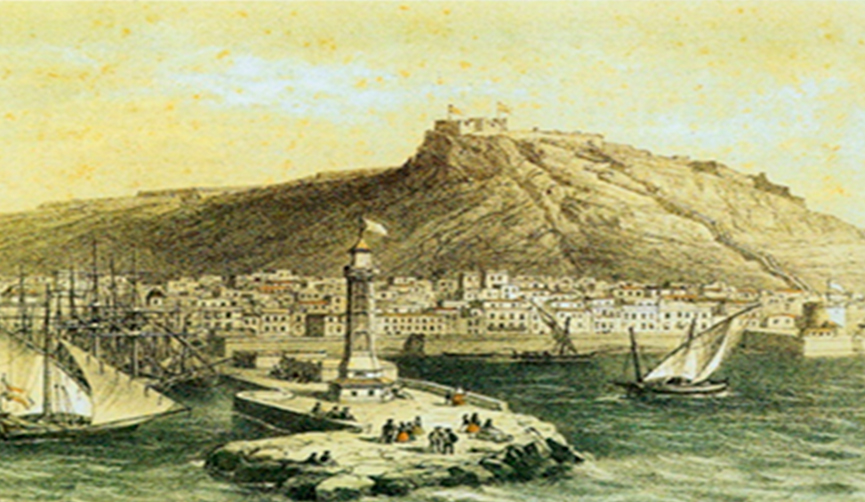
Even though the port was reduced at the start of the 16th Century to a stone breakwater around 200 feet long by 36 wide, the role played by the port infrastructure in mercantile traffic and the safety of its walls made Alicante one of the most highly populated cities on the east coast of Spain. In fact, according to the chronicler Viciana in 1564, “the 600 houses registered in 1519 increased to 1,100 in 1562”, which when added to the outskirts and the countryside brought the population to around 5,000 people.

Viciana, in his “Crónica de Valencia”, explains the reason for this growth: “The merchants have moved to this city because the goods they store here are very secure within the strong walls and their ships at sea, thanks to the good handlers, are safe from storms and even from pirates because the artillery of the bastions are looked after and defended where many Genoese and Milanese merchants have made their homes”.

Castile’s Port in the Mediterranean

Following the decline of Valencia, the reopening of trade with Italy through the Balearic Islands favoured the export of Castilian wool fleeces, and so Alicante once again became Castile’s port in the Mediterranean, since access to the meseta region through the Vinalopó Valley offered the fewest geographical difficulties.

As well as sacks of wool, soda, salt from the salt mines of La Mata, esparto grass, grapes, wines, almonds and soap were exported from Alicante, and luxury objects arrived from the Italian Peninsula, velvet and satin cloths, gold cloth, silk items, and all kinds of weapons.

Salted fish, consumed widely by the lower classes, exceeded any other imported product in terms of volume, with the exception of cereal. So, the salting industry was supplied with sardines, tuna and cod from the Atlantic coast of Andalusia and Portugal and even, from 1570 onwards, cod transported from the island of Newfoundland by English ships.

At the same time, the port became the most important receiver and redistributor of certain goods that arrived through coasting trade and, from Alicante, were re-exported on Dutch, English and French vessels towards Atlantic Europe. Foreign merchants usually took part in this trade through agents based in the city of Lucentum.

The development of the port infrastructure

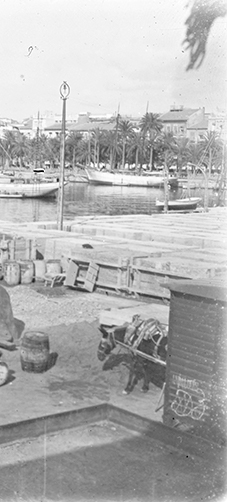
In the Modern age port infrastructure was, in general, very scant. Hence, ships anchored in places close to the coast and merchandise was loaded and unloaded using barges. In fact, only in places with a solid commercial flow was costly work undertaken to build a stone quayside.

Documentary evidence of the first breakwater in Alicante dates back to the late Middle Ages and did not reach further than 50 metres out to sea. In addition to this quayside or loading area, storage areas were created for merchandise and defensive installations. In fact, in 1491, two bombards were brought from Biscay to defend them.

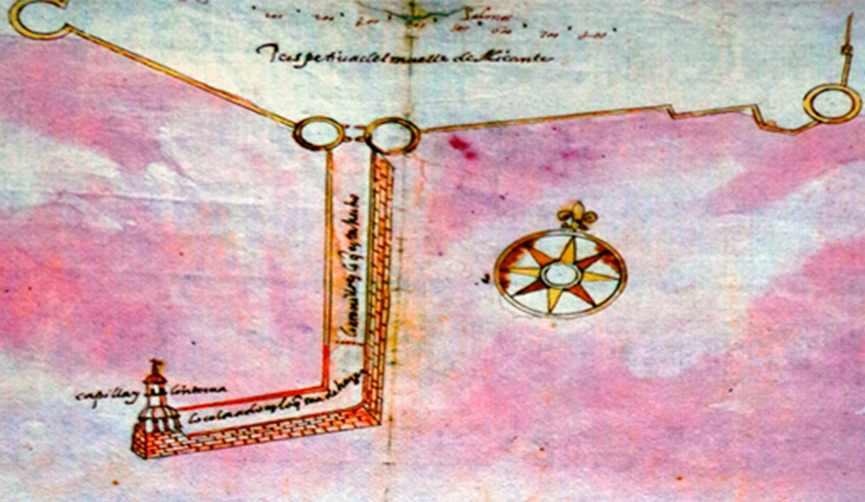
Minor expansions were made in the 16th Century, financed by municipal taxes charged for anchorage and mooring rights. Even though finance was allocated for construction work on the quay, all references to it disappear until the second half of the century. Between 1571 and 1576, Philip II ordered the city to continue with the construction of the quay. The idea was to provide a safe haven for war and merchant ships that reached the port, and considers building an additional arm or counter quay at a certain distance from the existing jetty, but without requiring it.

In 1575, the order was received to extend the infrastructure by around 14 metres in length, and that the head should face west to avoid the storms blowing in from the east. However, the initial project was rectified one year later because of the constant groundings caused by the major flooding from current Rambla de Méndez Núñez and the difficulties of mooring galleys. Therefore, in contrast to the initial plan, the aim was to extend it “as far as possible before that turning”.

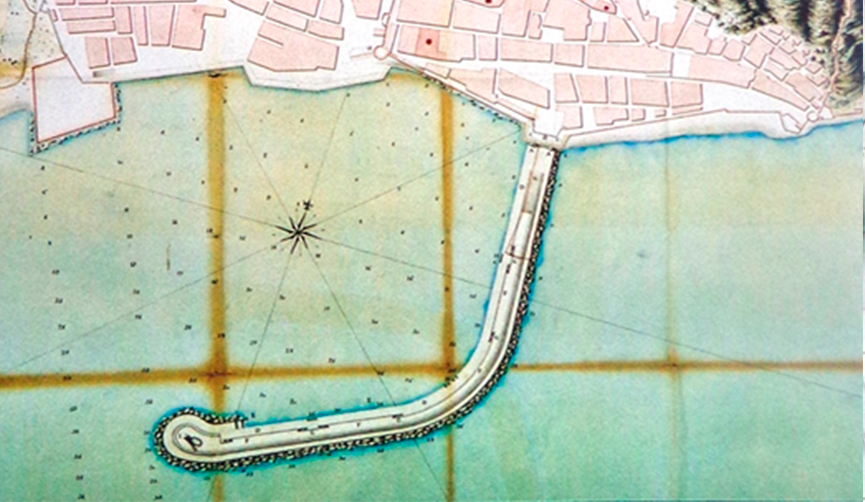
The latest reference to the port in the 16th Century is from the year 1582, when “the quay was extended 50 feet to improve its condition, since it entered the sea”. According to Vicente Bendicho in his “Crónica de la muy Ilustre, Noble y Leal ciudad de Alicante” from 1640, improvements to the quay were abandoned for a long period of time until 1688, when the definitive location of the counter quay was defined, accepting the starting point proposed by the military engineer Pedro Valero. The cost was estimated at 90,000 ducats.

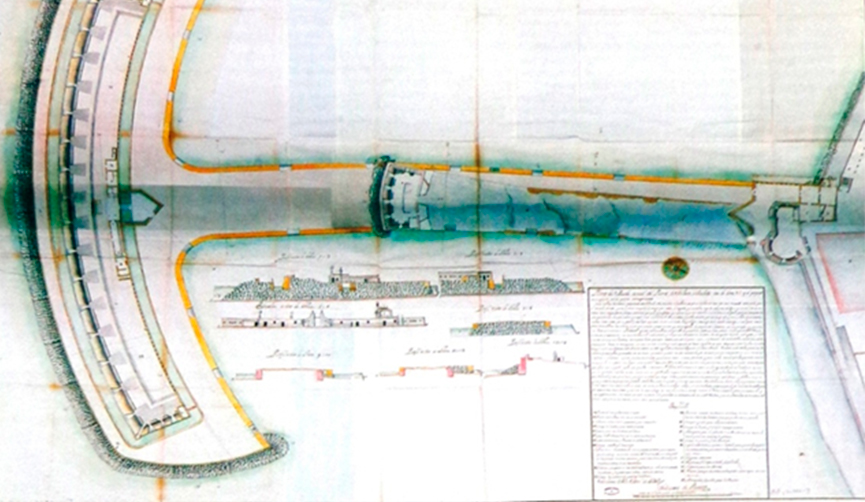
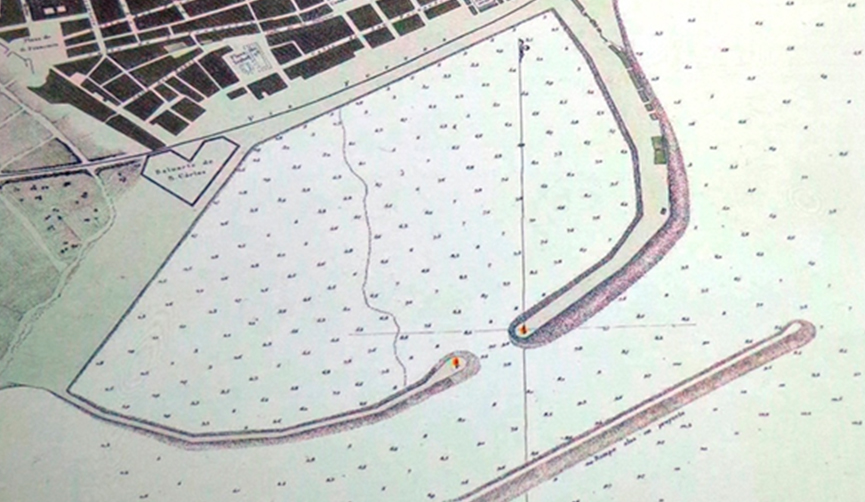
The five projects drawn up for the port in the 18th Century contributed no feasible new features to its plan and construction (two in the shape of an inverted L, two in a hammer shape, and another that encompasses the idea of a basin), except to propose new ideas for funding the work.

Constitution of the Port Works Council

Owing to its poor state of repair, in 1795, it was proposed that the necessary work should be financed using consular funds; however in 1803, the first Alicante Port Works Council was constituted, chaired by José Sentmenat, which would handle the money raised through City tithes and taxes. It was to follow the plan presented by Manuel Mirallas in 1794 and would start with a budget of 8,109,150 reales in fleeces.

At the end of the 19th Century, the Port of Alicante was classed as being “of General Interest of the Highest Order”, and depended directly on the Ministry of Development.

In the year 1900, the local council, convinced of the importance for the city of having a Port of General Interest, sent a report to the Ministry requesting the creation of a Port Council to undertake the expansion reforms to improve its condition.

The Ministry saw to this request by authorising the creation of the Works Council, which was constituted definitively on 11th January 1901, and José Nicolau Sabater was appointed Chief Engineer.

The deficient state of the facilities and the pressing need for improvements led José Nicolau to establish as a priority an “Improvement Plan Project”, with a budget of 6,800,000 pesetas, whose main aims were: to create an outer harbour to offer shelter to the entrance of the Port; and increase the linear surface area of the existing quays.

This project underwent various modifications over the years, and was not fully completed until the year 1911.

Between 1912 and 1917 various projects were undertaken that mainly involved creating new quays in the outer harbour, but with the outbreak of world war, their completion was delayed until 1922 mainly due to the shortage of raw materials such as cement, iron, etc.

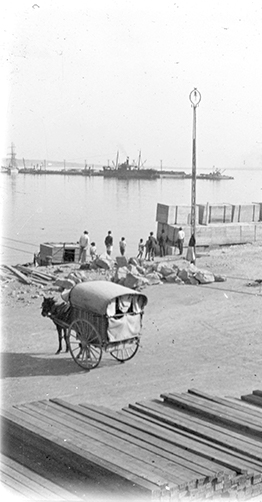
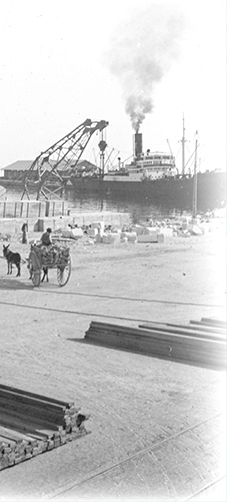
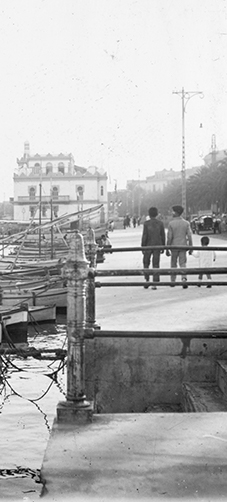
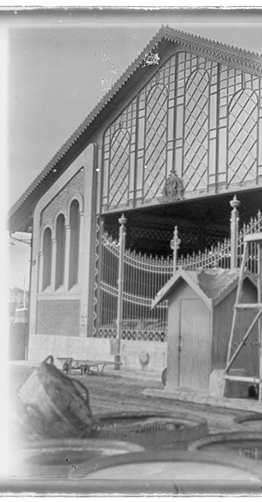
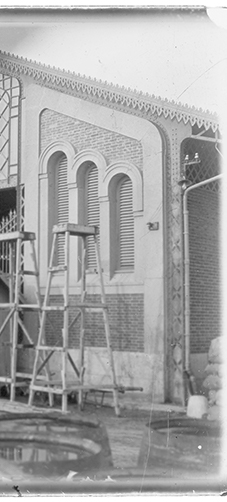
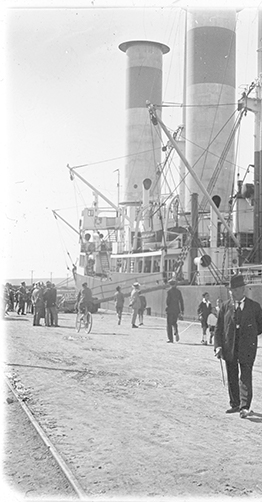
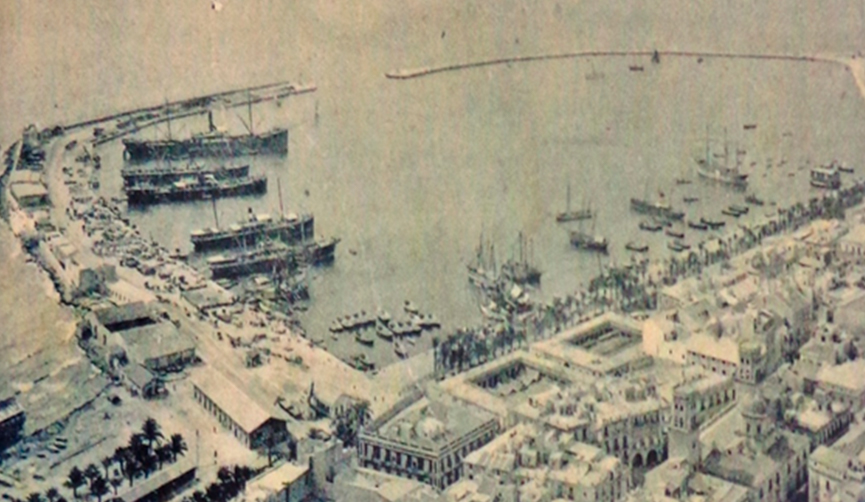
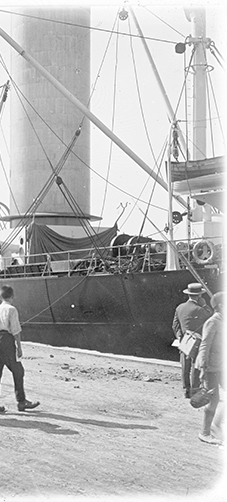
Once the work was completed in the Eastern area, the Western sector was improved and extended with the creation of new quays in the area of the inner basin and the construction of a dry dock. This series of works began in the year 1919 and was completed in 1927.

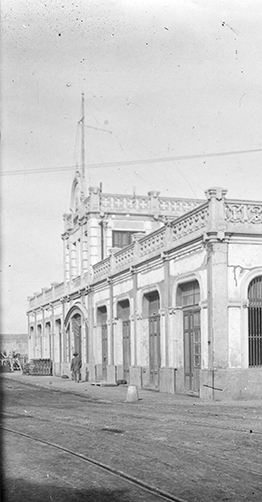
Between 1928 and 1935, various projects were undertaken, including the “Extension and Widening of the Eastern Quay”, as well as other more minor projects aimed mainly at improving the existing facilities. During this period, there were also major investments made to acquire different materials and machinery.

New Western Quays

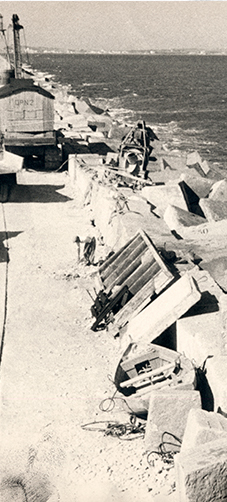
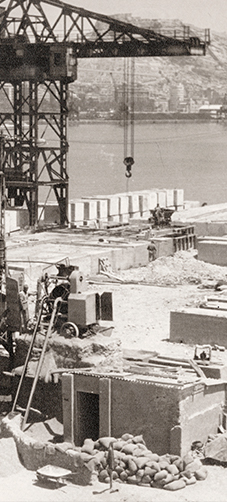
The need for deeper quays and the consolidation of Alicante’s industry in the Eastern area of the Port, as well as a new order received by the commission that was studying the installation of new fishing ports in Spain, were fundamental factors that led to the creation of the project “New Western Quays and Fishing Basin”, a project that was approved in 1933. However, the Civil War paralysed all work and it was not until 1946 that the Engineer Pablo Suárez Sánchez set the project back in motion with modifications to the budget. In 1947, the work was approved for this project, but for various reasons it was not completed until 1953.

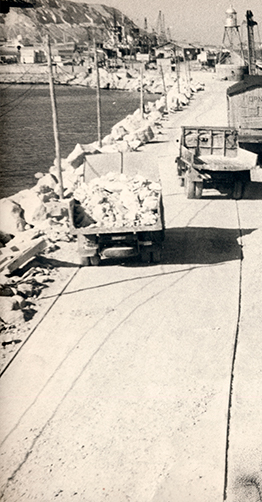
The major growth experienced by the Port in the 1950s and 60s in terms of oil derivative products being unloaded; the continual advances in new merchandise loading and unloading technologies, which required larger surface areas, and the appearance of new sea transport systems during the 1970s, highlighted the deficiencies of the Eastern Quays and made it increasingly necessary to expand the Port towards the West.

Años 60-701960s – 70s

1960s and 70s

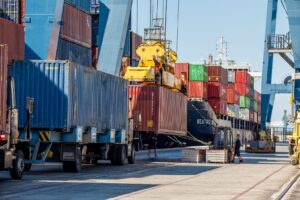
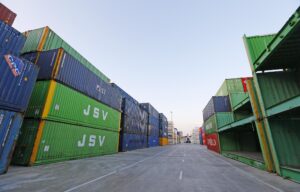
During the 60s and 70s, work was carried out to adapt the existing installations to new systems of sea transport (Roll-On Roll-Off traffic, Containers, Perishable Goods, etc…).

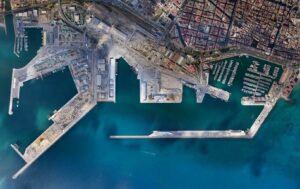
At the start of the 80s, when the Chief Engineer was Sergio Campos Ferrera, work began to draft a Special Plan for the Port of Alicante, with an initial investment of 20 billion pesetas, which focused fundamentally on the following aims:

  • Improving links between the port and city from the perspective of urban planning.
  • Evolving towards a more effective and profitable commercial port, in the Western area.
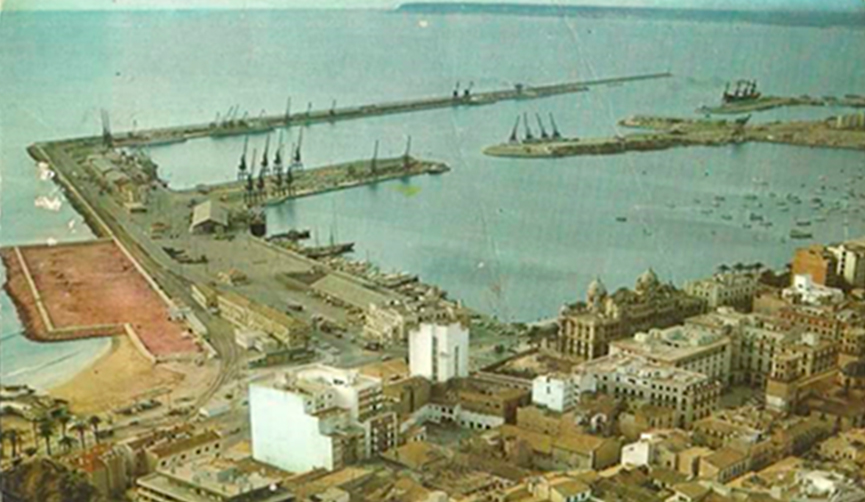
  • Reserving the Eastern quays for recreational craft, ferries, holiday cruises and warships.

Legal Advertisement

The present legal advertisement regulates the use of the web page service that the AUTORIDAD PORTUARIA DE ALICANTE gives to the Internet users

continue reading

Contact Information

Autoridad Portuaria de Alicante
Muelle de Poniente nº11
03001 - Alicante
Tel: 965 130 095
Fax: 965 130 034

contact

Accessibility

This website, that has been designed according the W3C advices and the current legislation, satisfies the AA accessibilty levels.

more about W3C